
The list lives on every phone
The shopping list everyone keeps up.
One person does the shopping and four people know what is missing. While the list lives on a single phone, the information always arrives too late.
Written by Clément Fabiani
The problem is not the list, it is the lag
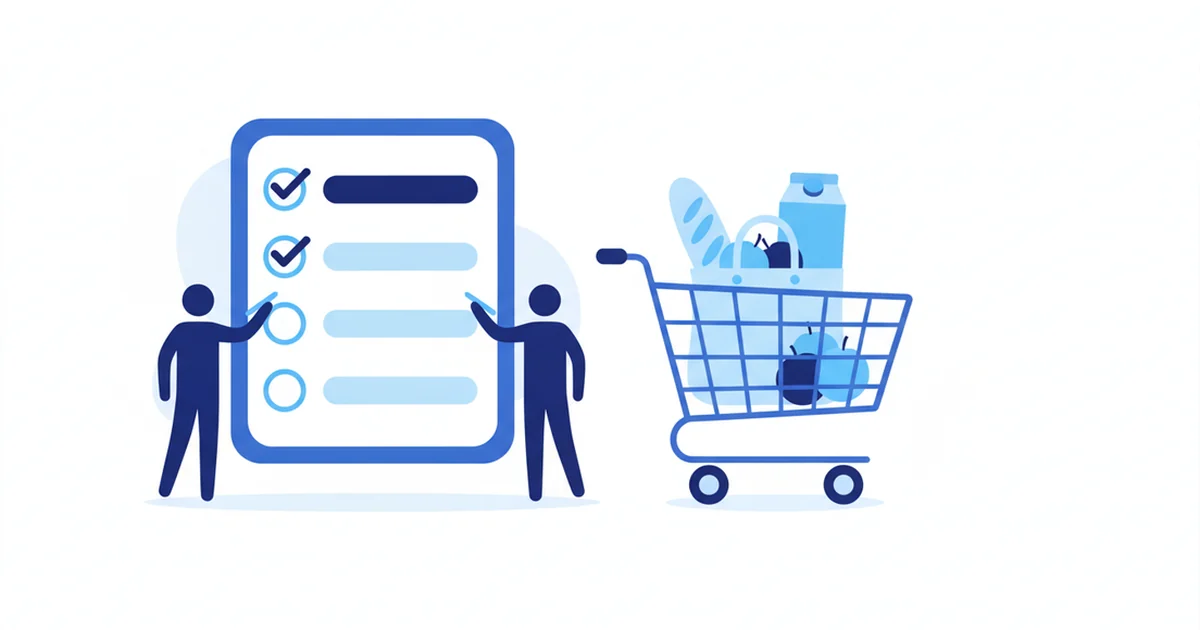
Everyone already has a list: on a scrap of paper, in the phone's notes, or sent as a photo to a group chat. The problem is always the same: it is frozen at the moment it was written.
Between the photo going out and the person reaching the aisle, three things have changed: someone finished the milk, someone else already bought the bread, and a fourth line should have been added. None of that reaches the shop.
What a genuinely shared list changes
- Everyone adds the moment they notice. The mustard goes on the list when the jar runs out, not on Saturday morning from memory.
- What has been bought disappears for everyone, including the person pushing the trolley.
- The list survives the week. You do not start from a blank page every time: the regulars come back on their own.
- No account to create elsewhere, and no sharing link that ends up travelling beyond the household.
Ordering the list to move faster in the shop
Twenty lines in random order make you cross the shop four times. The order matters almost as much as the contents.
- By aisle rather than by when it was added. Fresh, dry, frozen, household: that is the order you walk in.
- Frozen last, always, for the same reason you do not pick it up first.
- Quantities, not just products. « Milk » does not say whether one bottle is needed or six.
- Brands only when they matter. Otherwise you leave the shopper stuck in front of an empty shelf.
Several lists, several uses
The household
The running list the whole home tops up through the week.
A meal with friends
There the question is no longer what to buy but who brings what: one line, one person.
A flatshare
Each person shops in turn. The list shows what is missing and who paid last time.
Shopping for a parent
You shop for someone who no longer gets out. They add to the list themselves, without having to phone.
For a meal with other households the question is no longer what to buy but who brings what, and that one belongs in the event planning app. The date itself goes into the shared calendar.
A list is not a conversation
Most households run their shopping through a chat, because that is where they already talk. That is exactly what does not work: a message sinks, a list stays.
Bob keeps both in the same place without confusing them. The conversation is for talking, the list has its own state, and neither buries the other.
European, free, and more than a list
Bob is published by a French company and is free on iOS and Android. The shopping list is only one way in: the same mechanism organises a meal, tracks a borrowed item or prepares an event.
Grocery list or shopping list: the same thing
Americans search for a grocery list and push a cart; British shoppers write a shopping list and push a trolley. Same problem, same fix, and worth saying plainly so nobody wonders whether this page is about them.
What matters is not the word but the mechanism: several people add to it, one person buys, and what is bought has to disappear for everyone at once, including for the person standing in the aisle.
Staples and stock-ups
The biggest time saving is not in the weekly shop. It is in what gets forgotten every three months and then bought in a hurry at a corner shop price.
- The staples: coffee, washing powder, toilet roll, batteries. Never on the list, always missing.
- The stock-ups: what you buy twice when it is on offer, and then forget you have.
- The specifics: allergies, baby food, pet food. Exactly the lines where a brand genuinely matters.
- The non-food: light bulbs, tape, stamps. They sink into the food part of the list.
Frequently asked questions
Is the shopping list app free?
Yes, on the App Store and on Google Play, with no subscription.
Can several people edit the list at the same time?
Yes, and that is the whole point: anything added or bought appears immediately for everyone, including the person in the shop.
Does the list carry over from one week to the next?
Yes. You do not start from an empty list each time, which is what saves the most time on repeat shopping.
Do I need an account on a website to share it?
No. The list lives in the app, shared with the people you have added. There is no public link to pass around.
How should I order it to be quicker?
By aisle rather than by when things were added, leaving frozen goods until last, and giving quantities rather than just product names.
Does it work for a flatshare?
That is where it shows the most, because nobody is in the same place at the same time. Money fronted is logged as a loan, with the person and the amount.
What is the difference with sending the list in a message?
A message is frozen and sinks. A list has a state, updates for everyone at once, and does not get buried under later messages.
Is this a grocery list app or a shopping list app?
The same thing. Americans write a grocery list and push a cart, British shoppers write a shopping list and push a trolley. The mechanism is identical.
What gets forgotten most often?
The staples: coffee, washing powder, toilet roll, batteries. And the non-food items, which sink into the food part of the list.
Page updated on 17 September 2026.
